We authors like to think of ourselves as tortured souls driven to pour out our deepest emotions on the blank page, preferably while wearing a stylish scarf and sitting at a corner table in a quaint little café. We want to bleed ink and make the world love us. But the truth isn’t quite as dramatic or clichéd. We create a product that we hope to sell. If we’re traditionally published, then the publisher is responsible for the selling part once they buy the rights to our product. Or at least, we hope they take on responsibility for selling beyond merely producing the book and placing it with retailers. It doesn’t seem to happen all that much if you’re not a big-name author or the next hot literary genius.
But if we’re independent publishers, we’re responsible for the book’s entire life cycle, from writing the first word of the first chapter to keeping it alive as it fades away on our back list. It means we have to act like the traditional publishing houses in all aspects, albeit on a microscopically small scale. And that includes branding, which is often defined as [t]he process involved in creating a unique name and image for a product in the consumers’ mind. Branding aims to establish a significant and differentiated presence in the market that attracts and retains loyal customers.
And what are our respective brands, whether traditionally published or independents, you ask? The answer is simple: our names. People don’t buy books because they’re published by Hachette, or McMillan or Penguin Random House (they missed a good opportunity by not calling themselves Random Penguin House after the merger, but I digress.) They buy books based on the author’s name.
Yes, I incorporated my publishing business as Sanddiver Books Inc., and that name with its associated logo is on the copyright page of every book I’ve published and on the spine of every print edition. But while it identifies my corporation and its brand, that’s not my brand as an author. My brand is Eric Thomson. It’s the name associated with my work in the minds of readers. People don’t buy books published by Sanddiver Books Inc.; they buy books written by Eric Thomson. It makes that name my publishing business’ most valuable asset, just as your name is your publishing business’ most valuable asset. We authors must safeguard our names at all costs and that means we must avoid anything which might reduce its value in the eyes of our customers.
The opportunities to ruin one’s good name in the internet age are endless. The most obvious is by publishing a badly written or edited novel. Traditionally published authors have the advantage of quality control measures built into the traditional process. We independents need to replicate that process to a certain extent, which means investing in editing software, hiring an editor, using a proofreader, having others read and critique it, etc.
You know what I mean, right? If your first published novel has a grammar mistake or typo every second paragraph, has Hollywood movie-sized holes in the plot, or isn’t well written to begin with, your brand isn’t off to a good start. None of us are as competent as we think we are, so spend time and money on the right tools. A crappy first book isn’t the end of the world, but it makes perfecting subsequent books that much more important.
Another good way to damage your brand is by behaving badly, whether in person or online or by opining on controversial subjects. If you’ve read my author bio on my website, you’ll be aware I’m a retired army officer, and we have a sacred rule for discussions in the officers’ mess. Avoid any subject touching on religion, politics or sex. That rule has been around for a long time, since well before we invented computers, and there’s a reason for it: avoiding unpleasantness. It’s a rule author should adopt.
None of us are successful or famous enough to weather controversy unscathed in this era of cancel culture. Even Stephen King was recently mobbed online after making a statement that triggered the perpetually offended. Will it hurt his brand? Doubtful, but if you’re reading this, then you, like me, are unlikely to become a household name. It means we can’t afford to associate our brand with controversy, no matter how we feel about freedom of expression or the value of our opinions.
I realize some authors thrive on being controversial. They also have the sort of thick hide most of us will never develop and an established fan base that feeds off their pronouncements. I admire them, but I’m also painfully aware of my limitations, both as a person and as an author, so I avoid doing or saying things that might affect how readers see my brand. I daresay most authors share my limitations, not least because we tend to be introverts. If that’s not you, then please ignore my advice because it doesn’t apply. And more power to you, by the way.
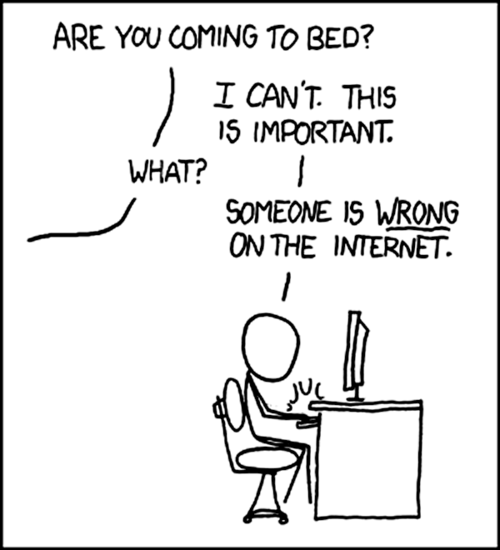
The characters in my books speak for me when it comes to how I see the world. However, Eric Thomson, their creator, doesn’t engage in political or social debates on the internet. I might do so in real life, as myself not as Eric Thomson the author, but then only with people I trust. Yes, the temptation to argue with an ignorant twit on social media can be overwhelming at times, but you must resist it at all costs, even if you’re in the right and they’re not only wrong but offensively so. Live vicariously by following controversial, rhino-skinned authors on social media. You’ll see cruelty artists at work tearing ignorant twits to shreds. It’s magnificent. I follow several and they never cease to entertain me. Their books are pretty good too, as you would expect from such larger-than-life personalities.
The same applies if someone attacks you or your work. Walk away. Don’t argue with a reader who trashed your book, don’t apologize if a reader is offended by something you wrote. Don’t engage, period. Interact only with positive people. Ignore the negative ones. Always act like a professional publisher, because your good name depends on it. The easiest way to get carpet-bombed by one-star reviews on Goodreads or retail sites is openly feuding with readers or other authors. And if you’re hit by one-star reviews you know are malicious or even attempts by rival authors to harm your business, ignore them. Readers are smart. They can tell the difference between a hit job and a genuine review.
Bottom line, your name is your brand. Don’t damage it. If you figure controversy will help strengthen that brand, then have at it. You’re a braver author than I. The safest course for your publishing business is to deliver a consistently well-written and well-edited product, one which will make readers devour your backlist and look for the next book. Equally important is to behave like a professional in all of your interactions under your brand name. After all, employers wouldn’t allow you to behave like a jackass on company time or in a way that besmirches the company brand. Why would it be any different for us independent publishers?
 Musings on the Business of Writing